Thursday, October 27, 2016

Is The Birth of a Nation a Sundance Darling or Wide Release Flop?


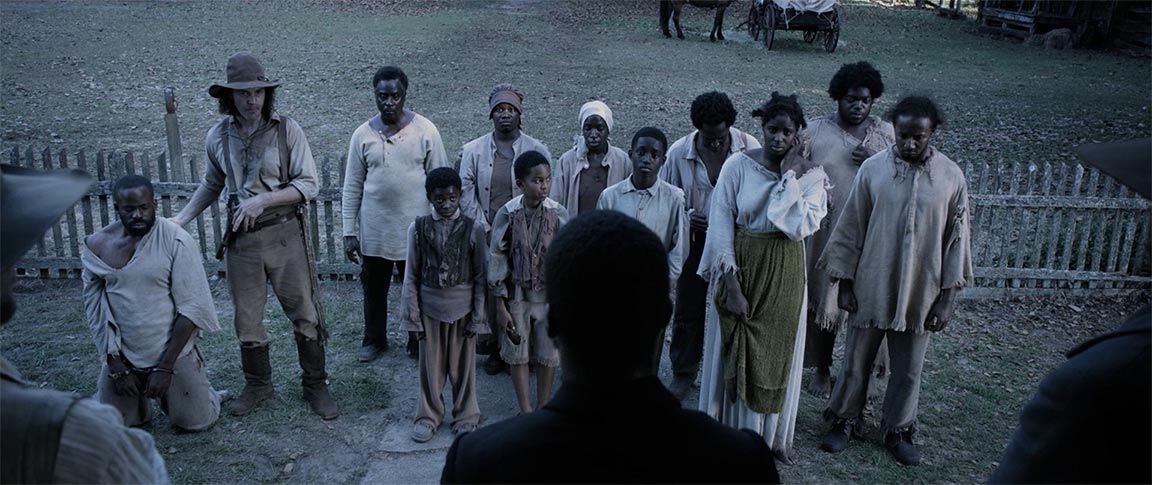
                The Birth of a Nations is a period biopic. It is the story of Nat Turner but like most historical melodramas the filmmakers were liberal in their use of artistic license with the narrative. This is not a failure of the film but rather the filmmaker’s choice to value theme and allegory over historical accuracy.
                Nat Turner is an outlier. He is a slave in the antebellum south that can not only read but is allowed to preach. As Nat Turner sees how his preaching helps his people stay enslaved he begins a path that will conclude in leading a slave rebellion.
                In his directorial debut Nate Parker is impressive. The film has already won the Audience Award and Grand Jury Prize in the U.S. Dramatic Competition at the Sundance Film Festival.  This led to The Birth of a Nation being purchased by Fox Searchlight for $17.5 million dollars, a Sundance Film Festival record.
                Nate Parker pulls a Woody Allen and writes, directs, and stars in The Birth of a Nation. If the title sounds familiar don’t confuse this The Birth of a Nation with D.W. Griffith’s historic but highly racist silent film. The title is no accident Nate Parker and the film’s producers purposely reappropriated the title.
                Period films are notoriously expensive. Nate Parker makes use of every bit of his relatively modest $10 million dollar budget. The battle scenes in the final third of the film are well done but one is tantalized by the notion of Nate Parker helming a historical epic with the level of budget a major Hollywood studio could provide.
                The Birth of a Nation is a complete film. It uses all aspects of the medium of motion pictures to convey a story.  
                Expert craftsmanship is on display in The Birth of a Nation. The practical sets, exterior locations, and art design are more impressive and convincing then films utilizing tens of millions of dollars in CGI.  The makeup and lighting departments do an excellent job of making the skin of the slaveholders and those participating in the slave trade pasty and unflattering helping to reflect their cruel and vile nature. 
                Too infrequently the camera itself is not used as a storytelling device in contemporary mainstream American cinema. The Birth of a Nation is not one these films. When Nat’s belief structure begins to be shaken the camera work reflects this.
                Symbolism and allegory are present throughout the film. At one point Nat is literally laid upon a wooden cross and collapses only to later rise up in defiance of his wounds and what the human body seemingly should be able to tolerate.
                The film’s melodrama is used to build archetypes as opposed to furthering plot or story like a soap opera. This Nat Turner is deemed special since birth and with his specialized knowledge he leads his people. These are key aspects of the hero’s journey. The Nat Turner story told in The Birth of a Nation is a mixture of mythology and folklore rather than a rigid historical retelling.
                It is impossible to watch The Birth of a Nation without taking into context that diversity both in front of and behind the camera continues to be an issue in American cinema. Time will tell if Nate Parker will be regarded as an important director but his directorial debut is an important film. Don’t wait for it on cable or Blu-ray The Birth of a Nation deserves to be screened theatrically as the filmmakers intended.
                 

Saturday, March 26, 2016

All Animals Are Equal, but Some Animals Are More Equal then Others


Run Time: 108 minutes

Country: USA
Director: Byron Howard, Rich Moore, Jared Bush
Production Company: Disney
Distributer: Disney
MPAA Rating: G

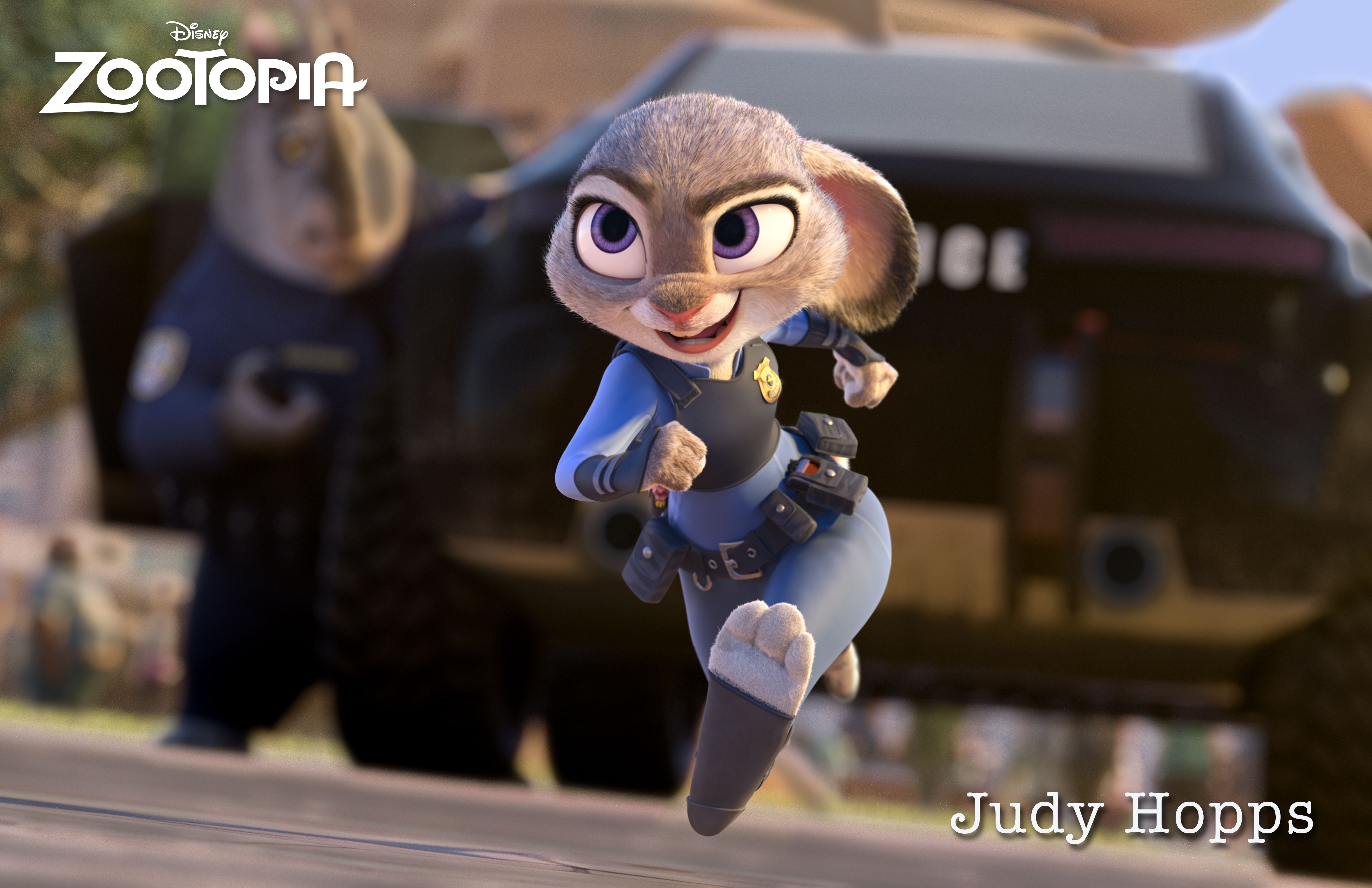
            Disney ended the year adding Rey to their stable of iconic female characters. This spring the mouse has added yet another strong female character in their latest animated feature Zootopia (2016). Police officer Judy Hopps is a female action hero voiced by Ginnifer Goodwin. Ms. Goodwin is no stranger to the Walt Disney Corporation playing Snow White in the television series Once Upon a Time. Disney has always dominated the little girl demographic with their iconic Disney princesses but in a few short months they have added two new female characters to their toy box of I.P. and these ladies are no princesses who need rescuing. They are full on actions heroes.
           
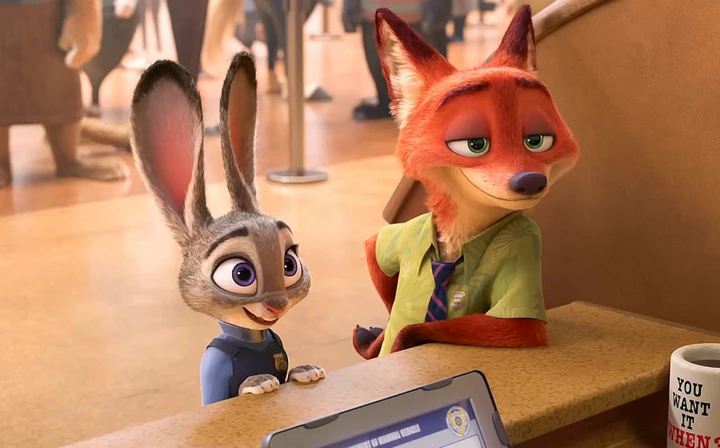
             Zootopia (2016) employs the plot device of a cop teaming up with a criminal. This is a classic buddy cop movie trope that’s been used in films like 48 hours (1982) starring Eddie Murphy and Nick Nolte and Midnight Run (1988) starring Robert De Niro and Charles Grodin. Children will enjoy the juxtaposition of the two lead characters and the comedy it inspires and adults will appreciate the nostalgia of the classic movie trope.
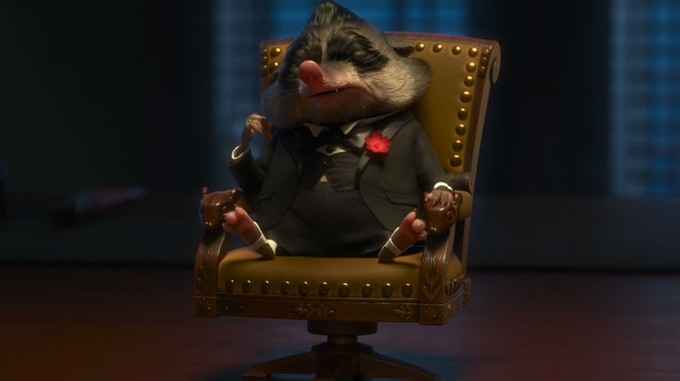
        Several references in Zootopia (2016) will most likely go over a child’s head but the adults or “big kids” in the theater will thoroughly enjoy them. Two of the more memorable references that are also large set pieces are The Godfather (1972) and Breaking Bad. The Breaking Bad reference was complete with Yellow hazmat suits, a blue drug being produced in a lab, and two guys (rams) named Jesse and Walter. The audience reaction in the screening I attended was very positive. Queens College undergrad and cinephile Anita Korosi said, “I loved it, I thought it was really funny and cute. It’s the best Disney film’s I’ve seen in the last few years.”
            The dichotomy of predator and prey in Zootopia (2016) is used as allegory for race or any group that can be deemed as the “other”. The word “token” and the cities “inclusion campaign” are overt references to race. When Judy Hopps meets the officer working the police stations front desk the films allegory is strongly conveyed when she explains to officer Clawhauser, “… a bunny can call another bunny cute but when other animals do it’s a little...” and he quickly apologizes, “I am so sorry. Me Benjamin Clawhauser the guy everyone thinks is just a flabby donut loving cop stereotyping you.”
            Zootopia (2016) encourages acceptance and inclusion. The motto of the titular city is, “In Zootopia, anyone can be anything." Unfortunately in a city that postulates anyone can be anything the only characters who have any sort of subtext of maybe being queer is Judy Hops’ angry neighbors. For obvious political and financial reasons Disney execs most likely saw having overtly queer denizens of Zootopia as problematic but it would have been nice for Disney to be a little brassier with their social commentary. It’s no secret that for years Disney has been far more gay friendly in its offices and corporate culture then in the media they produced.
            Della Saba’s voice performance is a scene stealer voicing the young Judy Hopps. This iteration of Judy might be the most memorable because these early scenes depicting Officer Hopps as a child are also the most biting satirically. Like the scene where Judy’s folks Stu and Bonnie give her some advice, “It's great to have dreams.” Says her father. Her mom chimes in, “, just as long as you don't believe in them too much.” Her father continues, “Judy, ever wonder how your mom and me got to be so darn happy?” “Nope.” Judy retorts. Her father continues on, “Well, We gave up on our dreams and we settled, right mom?” “Oh, yes. That's right Stu we settled hard.” Her mother adds. Sadly Zootopia wanted to focus on the main allegory and didn’t stray often to lampoon other areas of society that a plot and world like Zootopia (2016) would allow a filmmaker to do. Much like science fiction a film like Zootopia (2016) can use periphery distracting elements allows the storyteller to hide deeper often subversive meaning.
            Academy award winner J.K. Simmons’ voice performance as Mayor Lionheart calls to mind the bluster and self assuredness he brought to the role of J.J. Jonah Jameson in Sami Raimi’s Spiderman trilogy. Idris Elba voices Officer Hopps a no nonsense police chief (another classic cop movie trope). It appears Zootopia (2016) will be the first film in the Idris Elba Disney trilogy with The Jungle Book and Finding Dory due out later this year.
            The wide shots of Zootopia as Judy arrives via train are some of the most beautiful of the movie. I was really hoping for more shots that depicted the vast size and scope of a city like Zootopia and its many specialized zones (jungle, tundra, etc.). In an animated movie where you don’t need a budget from cranes, helicopters, and CGI you just need talented animators to make literally anything from your imagination come to life, I would have loved to seem more of the detailed and imaginative world building that is depicted in Zootopia (2016).
            For movie goers who are bit too serious and stoic to appreciate anthropomorphized gerbils in adorable teeny tiny business suits Tommy Chong has a cameo at a naturalist club where the bears go bare (if you get what I’m throwing down) that lampoon the idea of animals in clothes. Adults and children will both love Zootopia (2016). In a world where Hotel Transylvania 2 (2015) exists smart funny animated films that can be enjoyed by all ages should be championed and supported. 


Sunday, February 28, 2016

Genre and Social Consciousness in West African Cinema


          When people search for political films or films that comment on culture they typically seek out dramas and or art house films. Why are art house films and foreign films typically the bastion of academics and intellectuals? It seems counterintuitive to use something esoteric to highlight an issue or cause social change. One of the great things about visual storytelling and movies in particular are their accessibility as both an art form and communication tool. Aside from the oral tradition for the majority of human history consuming forms of storytelling like theatre and the written word was the privilege of the wealthy and elite. Today storytelling especially visual storytelling is consumed by the masses. Despite not being highly literate people today are more sophisticated consumers of story and narrative than ever before. For film theorist West African cinema is fertile ground to explore this intersection.
          Despite melodrama and comedy being considered “B” genres they are important genres both as art and cultural/political influence. The accessibility of cinema makes it an ideal to disseminating information to the masses. This is one of the reasons that German and Italian fascists were film enthusiasts.  Nollywood also unfairly faces a similar stigma as the comedy and melodrama genres. “Academic criticism has often ignored, condescended to, or denounced the videos because they did not seem politically serious.” (Haynes 2006). Coincidently melodrama and comedy are prominent genres in Nollywood cinema.
          Melodrama is a word that is used often in American vernacular but similar to the term found footage melodrama’s pop usage is often different from its academic definition. For the purposes of this paper is melodrama is a narrative work characterized by extravagant theatricality and by the predominance of plot and physical action over characterization. TV has a long history in Nigeria. Melodrama and comedy have a long history in television most commonly sitcoms and soap operas. Nigeria also has a long history of Spanish language soap operas called telenovelas. This history makes comedy and melodrama ideal genres for the Nigerian film industry.
          Using genres that are widely consumed by and associated with television is important to Nollywood’s appeal. Nollywood films are produced with home viewing in mind. Nollywood films are typically distributed via home viewing mediums like VHS, DVD, and VCD.  Despite Nollywood not having a wide theatrical release in the major West African movie theatre chains it remains an influential movement in West African cinema. “… advances in the industry of motion picture making could only be measured by the control over the means of production that a filmmaker secured, not by a film’s financial triumph.” (Genova 2013). Nollywood capitalizing on the home video market and direct to market distribution helped lead to an African owned movie industry. Before Nollywood much of West Africa’s film industry was dependent on overseas financing largely from Western Europe and North America. This reflected the neo colonialism that arose in post colonial West Africa. Nollywood being an African owned film industry with African filmmakers and African actors gives Nollywood an important role to play in decolonization.
          Not all West African Cinema is a Nollywood film but Nollywood films are West African cinema. Two large distinctions in West African cinema are African art house films verses Nollywood. Both can be political but the two differ greatly in esthetics, distribution, and cinematic grammar. Nollywood has a DIY esthetic utilizing video in its infancy before moving onto digital formats with better resolution and overall visual quality. Nollywood films also have a unique cinematic grammar ignoring things like continuity editing. Narratively Nollywood again breaks from convention. Films have longer run times then the average feature length motion picture produced in the west. In addition plot points will often be repeated. The repetition is important because Nollywood films are produced with home consumption in mind and take into account the viewer maybe doing household chores. Nollywood films are distributed mainly direct to video and African art house cinema is typically distributed via the festival circuit and screened in art house theatres in Europe and America.
          Despite African art house cinema often having overt political statements these films are rarely screened in Africa. For this very practical reason Nollywood films are a much more effective way of reaching African audiences. Despite this fact Nollywood’s esthetics and cinematic grammar are often used to be dismissive and reductionist towards Nollywood these are some of the factors that make Nollywood film’s more accessible in both viewership and production.
          Nollywood is not just a regional movie industry. Nollywood’s output makes it one of the largest movie industries in the world and similar to other large movie industries like Hollywood and Daliwood Nollywood exports a large volume of product. This export of a West African art form produced and distributed by Africans is influential in the pan African movement. Both during colonialism and post colonialism Africa has experienced a Diaspora. Africans and African culture spans the globe to places like the U.K., France, The Caribbean, The United States, and Canada to name but a few. The Nollywood film The Messenger (2013) is a comedy that can have a political reading of both the text and subtext of the film. In The Messenger (2013) everyone speaks Igbo even white Londoners and traditional Nigerian food and beer is prevalent. Instead of the colonial gaze depicting Africa we now have the Nigerian gaze depicting London. Themes associated with the pan Africa movement, colonialism, and the Diaspora is prevalent in the accessible and enjoyable comedy.
          In many ways Nollywood clashes with the ethos of third cinema. Third cinema is a cinematic movement that essentially states colonialism and neo colonialism are such critical issues that filmmakers need to ignore any commercial or mass appeal considerations in lieu of communicating serious political messages. In principle I agree with third cinema however in practical application Nollywood is a much more effective tool for communicating to mass audiences. The old adage sung by Marry Poppins is still true, “A spoonful of sugar helps the medicine go down.” (Andrews 1964). 
          Aside from the inaccessibility of African art films to the African masses in terms of consumption it is even less accessible in terms of the means of production due to the high costs related to equipment and materials necessary to make feature length films with traditional Hollywood production values. “The videos established themselves as an essential medium through which Nigeria represented itself to itself during the 1990’s…” (Haynes 2006). VHS & digital technology has played a huge role democratizing the craft of filmmaking & cinema culture globally and nowhere has the impact been as great as Nollywood.
          VHS and digital technology have caused great changes in both filmmaking and consumption of cinema in the twenty first century. It has made visual storytelling a much more accessible art form in terms of consumption and production. VHS is much cheaper then film stock and does not need to be processed before it can be edited. Also, VHS is much cheaper and easier to dub then 35mm film. This fact combined with the long history and popularity of television in Nigeria made this an ideal way to disseminate movies. These video movies were rarely if ever screened in Nigeria in the mainstream movie theatres. The screens in those theatres screened mostly foreign blockbuster films. This led to the rise of the video parlor. In Nollywood Africans are not only the filmmakers and talent they now control distribution and exhibition as well.
          If one’s goal is decolonization it is important to control the means of production and distribution. For years countries rich with natural resources saw the majority of its citizens live in poverty. That is because the general populace had no ownership in production or distribution there by not sharing in the win fall of profits when these raw materials were processed and exported. Nollywood as opposed to African art films are far more effective in combating colonization and promoting decolonization. African art films may have powerful messages but they often times receive funding from European and North American investors and production companies. This relationship helps perpetuate neo colonialism despite often times the best of intentions of both the filmmaker and investors.
          An important part of decolonization that art and pop culture play a role in is self representation. “Nigerian video films are the leading form of Nigerian popular culture.” (Haynes 2006). Africans controlling how stories about Africa and Africans are portrayed impact cultural perception. Films like Osufia in London (2003) are African films that do not have the colonial gaze while also entertaining mainstream audiences with its comedy that is both broad and accessible while also being political.
          Osufia in London (2003) is a comedy that appears to be a classic fish out of water story and is certainly not an African art film but that doesn’t mean it is not a political film. The political aspect of this story is instead of the audience laughing at Osufia for being a stranger in a strange land and ignorant of the customs the British are exposed and lampooned for both their greed and absurdity. Osufia is triumphant despite being underestimated by those who seek to defraud him.
          The Messenger (2013), Moolaade (2004), Ceddo (1977), Osufia in London (2003), Maami (2011) are all valid works of art despite some being African art films and others being Nollywood films or some being comedies and other melodramas. Separating films by “high” art and “low” art is reductionist and causes an incomplete study of film theory. Nollywood as a movement has many unique qualities such as its DIY esthetic and ignoring modern contemporary cinematic grammar. However in light of the issues stemming from colonization and neocolonialism Nollywood’s contributions to the craft of filmmaking are not as important as its ability to reach the average person. A film industry where Africans own, produce, perform in, distribute, and exhibit their own motion pictures is important in an area of the world victimized by colonialism and neocolonialism. Nollywood illustrates the triumph of independent film culture in Nigeria as both a powerful art form for expression but a vehicle for political and social change.


Works Cited

Mary Poppins. Directed by Robert Stevenson. Performed by Julie Andrews. 1964.
The Messenger. Directed by Obi Emelonye. 2013.
Genova, James E. Cinema And Development In West Africa. Bloomington: Indiana University Press, 2013.
Haynes, Jonathan. "Political Critique In Nigerian Video Films." African Affairs, 2006: 511-533.
Maami. Directed by Tunde Kelani. 2011.
Osuofia In London. Directed by Kingsley Ogoro. 2003.
Ceddo. Directed by Ousmane Sembene. 1977.
Moolaade. Directed by Ousmane Sembene. 2004.

Friday, February 19, 2016

Fox’s Mighty Marvel Merc with a Mouth Is a Crowd Pleaser


      Deadpool (2016) is great fun. The reaction of theatre goers after the screening I attended the evening it premiered might have been more positive and enthusiastic then what I experienced at the conclusion of the Star Wars marathon after The Force Awakens (2015) was screened. The jokes that are both visual and verbal and come at a machine gun pace. Think Airplane (1980) for a point of reference for the volume and pace of the jokes. If one joke doesn’t land don’t worry another one is coming seconds later.
      Fox’s Deadpool (2016) being meta irreverent action comedy is another step in unlocking the potential of the superhero film genre. Superhero films can be a canvas for a wide breadth of stories and genres. Both Marvel Studios and Fox have produced highly successful super hero period films and Warner Bros. will join them when they release Wonder Woman. Marvel Studios up to this point has been the most eclectic in their cinematic adaptations making a space opera, a heist movie, and spy thriller while Warner Brothers can’t figure out how to bring any of their other properties other then Batman and Superman to the silver screen. Fox has taken a cue from Marvel and has started to dig a little deeper into their toy box. This is why comic books as source material for feature films are not reaching a saturation point. Comic book movies like the western has the potential to last for decades because it is a genre that allows a filmmaker to tell a wide variety of stories.
      X-Men enthusiasts will revel in some of the great fan service moments in Deadpool (2016). The X-Men’s Blackbird makes an appearance and is the most faithful depictions we have seen in cinema thus far. Negasonic Teenage Warhead eventually rock’s the 90’s era yellow and blue X-Men training uniform. We have come a long way since X-Men (2000) where yellow spandex was a punch line and in 2016 it is a reality. In a post Avengers (2012) world faithful adaptations of costumes is a must no matter how garish. Deadpool’s costume is very faithful to the source material and from the look of Psylocke’s costume in the X-Men: Apocalypse trailer Fox is continuing the trend of costumes true to the source material and I applaud them for it.    
      Brianna Hildebrand is the discovery of the film. Negasonic Teenage Warhead is a character she creates and inhabits with poise and ease. I would love to see her teamed up with Wolverine in a future film. The ole canuckle head is often put in the role of mentoring teenage girls. The dynamic of mentoring a teenage girl while Wolverine is dealing with his own brutal animalistic nature makes for a great character study. Putting Deadpool in a position to be a mentor to Negasonic Teenage Warhead was a choice I was rooting for but never got. Alas, maybe in the sequel (Fox green lit a sequel opening weekend).        
      The several origin story flashbacks eventually slow the movie down from its breakneck pace. Despite the clunky flashbacks the film still manages to fly along dispensing jokes and action with reckless abandon. All the players are game for this manic superhero romp and the supporting cast do a good job of being the straight men and woman to Deadpool’s madcap insanity. Hopefully Deadpool’s success critically and financially will lead Fox to go deeper into their comic book toy box. Fox’s possession of X-men and Fantastic Four intellectual property gives them a very strong and deep bench of charecters.
      The advances made in CGI and motion capture technology allows storytellers to bring any character to the big screen regardless of how outrageous the power or character design might be. The eyes on Deadpool’s mask come alive utilizing CGI. This detail helps the character emote while in a costume that covers his entire face. I hope the animators working on the latest iteration of Spiderman take notice and use a similar effect on Spiderman’s costume. The web slinger’s eyes on his mask operate very similar to Deadpool’s in the source material and the CGI animators translated it brilliantly to the big screen in Deadpool (2016). Every time I saw Negasonic Teenage Warhead use her power I couldn’t help think it was a test run for the depiction of Cannonball’s powers in future films (fingers crossed).
      Deadpool (2016) reinforces the notion that the most interesting super hero films are the ones that blend and bend genres. Deadpool (2016) boasts machine gun paced action and comedy combined with the production value of a summer blockbuster. The Merc with a Mouth gets a faithful cinematic adaptation that will appeal to both comedy and action genre fans alike.